SCOTUSblog » Academic Round-up

Showing posts with label tax policy. Show all posts

Tuesday, September 9, 2014

Why the American Government is failing

The United States faces a number of challenges demanding government action. These problems are not unprecedented, but they are serious. ISIS looks a lot like Hitler to me; Ferguson looks a lot like Selma; the economy looks like has for most of US history outside the 30 years following World War II. Real people may suffer if we manage to ignore some or all of these things.

Yet the current federal government appears unable to respond in any meaningful way. Executive action is stymied by Congress and the courts not out of principle but out of dysfunction. It's not that Congress disagrees with any particular action, it disdains all action. It's not that the Supreme Court guards against abuse of power, it stands in the way of the narrow agenda of five people. President Obama, like President Bush, has not found a way to rally the necessary popular or political support to overcome these obstacles.

Francis Fukuyama, writing in Foreign Affairs makes a compelling case for the view that these failures are systemic and pervasive. The constitutional system designed 250 years ago may work in a general sense, but the way we are applying it right now will stymie or efforts at progress.

Francis Fukuyama
http://governanceproject.stanford.edu/people/fukuyama/

At bottom, Fukuyama argues that we have sucked all the flexibility out of our system. The combination of entrenched special interests (sugar producers, oil producers, unions) and populist resistance to technocracy has stifled the kind of innovation and dynamism that is supposed to be the hallmark of democratic systems. As Exhibit A he offers the US Forest Service, which used to be run by scientific experts insulated from pork barrel politics and narrow regulation by Congress. For a long time it made decisions -- some of them based on faulty information -- in the interest of the long-term good of the country. But soon the agency was eroded by the decay that Fukuyama says is inherent in any system, and the rational, fleet decision-making process bogged down in competing and even conflicting agendas.

The TEA Party is a the worst symptom of the problem, in my view, but it is not the cause.

As I have been saying for twenty years now, we are in the midst of a paradigm shift. These cause existential crisis because they reflect a change in the fundamental reality on which all our assumptions are based. We may be seeing the last decline of our particular form of liberal democracy.

Then again, we may not. If we as a group, as a society, can muster the energy and innovation necessary to see the change we need -- the kind of thing about which Americans have been most proud in their history, justifiably so -- we can transform rather than dissolve.

Now is the time, though. We need to get going.


Thursday, July 31, 2014

A Real Lawsuit and ... No

Since Congress prefers not to do its own job -- which consists of passing legislation designed to help govern the country -- it has decided to pursue a silly and frivolous lawsuit against President Obama for attempting to do his. This act is nothing more than inconsequential political theater, contrived because the Republican House already tried impeachment twenty years ago and it did not go well. Attacking Obamacare like this is dumb.

Another suit actually conforms to the rules for "cases in law and equity" designed by the Constitution. I don't agree with the plaintiffs, because I can't see why Obamacare is the abhorrent infringement on liberty they do. At least it's not stupid.

The Affordable Care Act is not Big Government, it's not an intrusion into anyone's life, but it is a big deal, and the courts may be one necessary venue for working it out. I do grow a little tired of the steady drum beat, though.

Monday, July 28, 2014

Clueless and "Conservative"

Before you fling epithets around, at least know what they mean.

Most of the disgusted comments following Kevin E. Lake's flimsy, ill-informed "expose" of the Wounded Warrior Project suggest that somehow "liberals" are to blame for the problem Lake purports to reveal. Why? No one seems to know, including the people doing the lamenting.
http://tipofthespearventures.com/wounded-warrior-project/
Lake's complaint is that the WWP is corrupt --as all charities are, in his view -- largely because they do not spend enough of their money on the wounded soldiers themselves but also because of some vague problem with non-disclosure agreements that I can't follow. He provides no numbers and no names for the anecdotes he uses for evidence. Nor does he offer a standard for what makes for legitimate charity work, perhaps because, in his view, we should all emulate him and just walk around handing money to veterans we know on an individual basis.

By most independent assessments, the WWP is pretty good, if not great, in its use of the money it receives. Every charity has to use some of its money for administrative costs and fundraising, and this one seems to balance these interests reasonably.

My issue, though, is with the bizarre discourse around Lake's weird little piece. 

Conservatives' biggest complaint is with excessive expenditure and empowerment in the federal government. They claim not to be heartless or greedy or self-centered, but to believe that freedom and self-sacrifice and community are best served in the private sector. These are not unreasonable positions to hold, and they are almost certainly correct in many instances.

Conservatives also tend to holler that liberals don't respect soldiers or the military.

OK, so the Wounded Warriors Project ought to be a conservative fan fave. And that's even if the CEO is paid millions of dollars to do his job. If the conservative point of view is correct, then the CEO deserves to be paid a lot of money for the service he provides in aggregating the donations of millions of people and distributing them to soldiers wounded or impaired by war. Government is nowhere to be found here, in part because the organization is not taxed, as a non-profit.

If the WWP is poorly run -- and there is no evidence in Lake's rant that it is -- then that has nothing to do with liberalism or conservativism. Nothing. 

Those who want to attack liberals, Democrats and Obama may have good reason, but they make themselves look like idiots when they fling around words without paying attention to what they mean, and thereby undermine the legitimate, serious dialogue we ought to be having.


Tuesday, June 24, 2014

The GOP and X-gate

Ever since Watergate, Republicans have been keen to demonstrate that they are not the only ones guilty of official malfeasance. Although they were unmoved by the obviously illegal behavior of Ronald Reagan and George W. Bush as they traded arms for hostages with a country identified as a state sponsor of terrorism, and as they deliberately violated a law passes by Congress to prevent interactions with a corrupt and violent insurgent group, they have since scrounged up all kinds of scandal.

Thus, the bizarre behavior of Kenneth Starr, the investigator in search of a crime; birther fanatics insisting that Barack Obama is not American; the weirdly hysterical outcry about the Benghazi attacks; and now the "investigation" of the IRS for targeting conservative groups.

The problem with all of these protests is that the behavior they decry is hardly in line with the wildly unconstitutional acts of the Republican versions. Bill Clinton was a lech, but he did not abuse his office in a serious way. Obama has a birth certificate, and his only "crime" seems to be that he is black and Harvard-educated. If the State Department did want to portray the Benghazi attacks as protests, and succeeded in doing so for two days, so what? And the "targeting" of the Tea Party by the IRS has more to do with campaign organizations masquerading as tax-exempt non-profits (and therefore robbing the government) as it does with official malfeasance.

It's just another indication of the fact that the Republican Party has become unhinged, to the detriment of us all. We need at least two sane parties, the GOP is not holding up its end.

Tuesday, January 14, 2014

For the Constitution of the United States

Recent articles in a couple of journals suggest that a movement is afoot to overhaul or dispose of the Constitution as currently written. To an extent, the articles support the premise. They are badly mistaken.

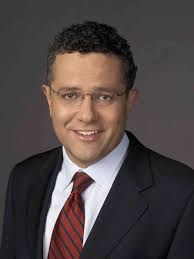
The most recent version came from Jeffrey Toobin, in The New Yorker and was called "Our Broken Constitution." Subtitled, "Everyone agrees our government is not working. Are the founders to blame?" the piece quotes at length various critics of the constitution. Some argue that it is too democratic, especially since we began holding direct elections for senators. Others say that it's insufficiently democratic, and allows the president or small minorities or states to hold the majority hostage.

Jeffrey Toobin

In "Should We Discard the Constitution?", David Cole points out that the Supreme Court has put a break on much needed and popular reforms, including affirmative action, voting rights, and election reform. He cites his friends and colleagues Mark Tushnet, Barry Friedman, Michael Klarman, and Louis Michael Seidman as scholars arguing that some or all of the system is fatally flawed. 
Professor David Cole, Georgetown Law

But as smart as the people must be, they are blinded by scholarly myopia. That is, they spend so much time focusing on the technical details of the document and its internal functioning that they miss the fundamental issue. The document and its system is only as good as the people who operate it. To make a lame analogy, the best coach in the world can not win a football game if his players are not talented enough to beat the opposition. If the people don't execute or understand the system, it can't work.

Take the filibuster, for example. I have never been sure that it is constitutional in its principles or application. It did very little serious damage, however, until people abused it and prevented the president from seating necessary federal officials. In the same way that 2nd Amendment advocates say that guns don't kill people, we can say that the filibuster may be dangerous, but only in the hands of killers. 

Our representatives have to accept the rule of law and the concept of constitutionalism, or no reform can work. As John Adams wrote, public virtue is the only foundation of Republics. There must be a positive passion for the public good, the public interest.Although the system of checks and balances was designed to counteract the effects of corruption or self-interest to a degree, it could not function without the good faith of key people. No system is foolproof.

We don't need a better system, we need fewer fools.

Monday, December 16, 2013

What Civil Debate Can Do

Republicans are still throwing temper tantrums over the end of confirmation filibusters, but maybe that the new rules will allow the whole federal government to begin functioning more effectively. Already we have people stepping into major jobs in the administration, and the Washington DC Circuit Court may actually be adequately staffed for the first time Obama was elected.

Meanwhile, Congress actually passed a budget bill without bringing the world economy to the brink of a crisis. Bad-ass budget boy Paul Ryan helped broker the agreement, and at least one fellow Republican even praised him for it.
Paul Ryan

Even Fox News seems to think that passing a budget is not a major moral failing.

Maybe these people are actually planning to do their jobs now, instead of engaging in endless nonsense. 

Wednesday, December 4, 2013

Why "Right-Wingers" are Right on the 17th Amendment

According to this piece in the Huffington Post, it's "right-wing" to have reservations about the 17th Amendment. I don't consider myself "right-wing," but I'm no fan of this particular amendment.

Before 1913, when the constitution was changed, federal senators were chosen by state legislatures. The Senate was to be removed from popular opinion in a way the House of Representatives was not. Not only did senators serve for six years, but they would never have to campaign in the way that their colleagues in the house had to do. In theory, the filter of the state legislatures would provide more able senators than the base tastes of the masses could produce.

In the early 20th century, Progressives systematically opposed government by elites. They advocated for popular votes in primaries and Senate elections, demanded greater transparency in local executives, railed against special interests like railroads and food producers who did harm to people, and defended the rights of minorities, women and children, all of whom were essentially defenseless against the back-room power of caucuses and state legislatures. And for sure, cronyism and corruption wafted from the halls of capitol buildings everywhere from Albany to Sacramento. Calling for greater public accountability made (and makes) a lot of sense.

But the direct election of the US Senate does change the basic structure of the federal government and alters the way the constitution works. It's not at all clear to me, for example, that a guy like Ted Cruz could have made it to the Senate through the Texas legislature, because the crass demagoguery characteristic of his campaigns would be irrelevant. Maybe the Texas legislature is also filled with TEA Party yahoos, but in the case nothing could be done. Both houses of Congress now must bow to popular whims; would people like Arlen Spector lose their jobs if they were not directly elected? And look at the effect of direct election on the House: John Boehner has to behave like a craven dog at the feet of a tiny minority because he's worried about the next election.

So repeal of the 17th Amendment, or even an end-around of it, may not be the best idea, but at least it's not just "right wing."


Friday, November 22, 2013

The Filibuster and Partisanship

In the wake of the Senate's vote to change internal rules on the filibuster, Republicans are vowing revenge, and The New York Times has expressed fear that partisan disputes will intensify. Both are nonsense.

First, what would revenge look like? The nomination and confirmation of responsible appointees to federal positions? Are we supposed to fear such a thing? Charles Krauthammer seems to think so. He says,

The Democrats will absolutely rue the day, because not only are they going to allow a Republican majority, which will come one day anyway, to get its nominees through, but Chuck Grassley has said that when Republicans come into power, they’re going to include Supreme Court nominees. And that would be a devastating blow to the liberals on the court, and to the liberals in the country.
Say again, why don't we want the elected majority to confirm its nominees? Krauthammer is saying that the Republicans intend to be irresponsible in their nominations just to spite the Democratic Party, then they need to examine their priorities. (I have already said they need to do so, anyway.) What kind of bizarre argument is that?

As for increased partisanship, the filibuster allows a small faction to interfere with the functioning of the system. That's the height of partisanship, and the Times itself published the data to show how bad it already is. Interference with nominations not only has increased steadily, but it's spiked since the election of Obama. How much worse can it get.

I'm glad to see the filibuster reduced. I never liked the thing in the first place. I think it fundamentally violates the principles of Article I section 7 of the Constitution.

Sunday, November 3, 2013

Jason Whitlock on Illegitimacy and Society

This column is among the best I have read on any social issue in a long time. It is concise, precise, direct and entirely free from nonsensical party affiliation. I hope it gets a lot of attention.

The highlights:

"Dez Bryant's inability to control his emotions is not a racial issue. It's a family dysfunction issue...

"But the reality is, Dez Bryant is swirling in a cultural tsunami every bit as destructive and powerful as climate change.
Let's call it 'Hurricane Illegitimacy.'
Its victims are primarily black and brown, but Hurricane Illegitimacy is a not black or brown problem. It's an American problem that is denied and exacerbated on the left and mischaracterized and exploited on the right.
Like climate change, Hurricane Illegitimacy is powered by man-made factors:
1. A lack of proper restraints on welfare entitlement programs for single mothers and fathers.
2. America's bogus war on poor people who use and sell drugs.
3. Turning incarceration into a for-profit business model.
4. A refusal to recognize that investment in the education of our poorest and weakest citizens could strengthen our entire society.
5. Our collective lack of courage and resolve to combat popular-culture forces that celebrate, normalize and profit from baby-mama and criminal culture...
"The seeds for Hurricane Illegitimacy were planted in the late 1960s as backlash for the civil rights advances won by Dr. Martin Luther King Jr. Too much of this current generation of young people are the unwitting victims of America's unwillingness to protect the sanctity of family. The people who deny this obvious reality are every bit as delusional as climate-change deniers...
"The normalization of illegitimacy is so pervasive in black America that people are afraid to publicly address its dangers and consequences out of fear of being labeled a sellout or a racist. It's been so normalized that some people honestly don't believe it's a problem.
Ignorance is blissful and deadly. Ignorance is why we see Dez Bryant misbehave and automatically think race rather than family.
Ignorance is why we don't understand that the black family structure thrived and survived until our lawmakers launched a drug war, mass incarceration and shortsighted welfare policies.
Ignorance is why we've failed to object forcefully to pop-culture forces using their unprecedented power to promote hedonism as the ultimate high over family evolution.
Dez Bryant's behavior and our reaction to it are just symptoms of a much bigger problem."
I don't ordinarily quote at such length, and I hope this does not come as outright theft. Whitlock's words need wide circulation.


Sunday, October 20, 2013

Say Again, Who are the "Adults"?

After the fiasco of the first two weeks of October, in which the federal government ground to halt so we could all watch a few grown men throw a temper tantrum, there have been countless finger-pointing analyses. In this one, Senator Orrin Hatch laments the failure of "the adults" to take charge of the House of Representatives. He and other "establishment" Republicans, especially in the Senate would like to blame the Tea Party types like Texan Ted Cruz for making the party look like a bunch of fools.

But that's way too easy. Cruz is not in the House, and nobody has to listen to his self-serving nonsense, because he has no power and only limited influence. The people who refuse to accept the fact that Democrats, led by a black president -- that's right, I said this is about race -- won not one but two consecutive national elections represent only a small minority of the Republican Party. Why are they at fault?

Wack-jobs like those in the Tea Party movement only have seats in the government because "establishment" types gerrymandered their districts to ensure that no Democrat could win in certain parts of the country. Republicans did not invent this kind of vote rigging, but they have had to rely on it more in recent years as their policies have grown increasingly silly. Karl Rove was no rebel when he advocated this kind of cynical manipulation; in fact, he was the hero of the party back when his take-no-prisoners power grabbing helped the party win the White House. Now everybody acts like they never heard of the guy.

Furthermore, it was John Boehner's fool strategy not to accept any deal that required Democratic votes to pass it that caused the crisis. We all could have safely ignored all the noise from the wack-jobs if the two more reasonable factions had agreed to work out a deal. Instead, the "adults" insisted on enabling and coddling the "children" rather than working together to do the right thing. None of this stuff had to happen.

Friday, September 27, 2013

The Meaning of "Lawless"

Senator Mike Lee thinks that the Supreme Court's decision in National Federation of Independent Business v. Sebelius was a "lawless act." The argument, according to one sympathetic blog, goes like this:
"the people’s representatives may presume to pass laws in accordance with their constitutionally enumerated powers, but if the Supreme Court wishes to rubber stamp the president’s pronouncements and paint them with the color of law, the justices will simply substitute language permitting any imaginable act of despotism in open defiance of any congressional intent to the contrary."

So what is this supposed to mean? It seems to suggest that President Obama "proclaimed" the Affordable Care Act without Congressional approval, and that the Supreme Court then "rubber stamped" it without reference to the actual law. If such a thing were to happen, it certainly would not be a good thing. Of course, I'm not sure how it could occur short of a military coup, but hypothetically it would be bad.

Is that what happened? Of course not. A majority of both houses passed this law, and Obama signed it into law. A series of suits arose in court questioning the constitutionality of the law, and appellate courts differed in their conclusions on the matter. The Supreme Court then accepted the case, heard it, and ruled on it. In terms of process, nothing could be more routine or lawful.

The law regulates a type of activity -- the delivery of health care -- that spans all states and therefore might be considered, though it does not have to be, an form of interstate commerce. It requires that people acquire health insurance so that individuals, and not the collective society via the government, are responsible for paying for their own health care. 

Whether medicine is commerce, and whether the delivery of medicine to a patient constitutes interstate commerce are interesting questions, though I tend to think it's pretty clear that the answer to both is "yes." But neither conclusion is "lawless." 

That's what is so damaging about the shrill, irrational declarations of people like Mike Lee. They throw themselves from ordinary political discourse into hyper-moral opposition to the whole system -- and to discourse itself. These people think they are like the antebellum abolitionists (although I doubt Lee and other Tenth Amendment aficionados would have supported abolition), battling a fundamentally corrupt system. And what's the answer to such a problem? War.

Lee and others misapply the kind of inflammatory rhetoric that leads to actual physical conflict. Over how to reduce the cost of healthcare? Really? 

Now that is lawless.

Wednesday, July 17, 2013

Is the Filibuster Constitutional?

Republicans these days like to complain that they are being bullied by Democrats who are challenging GOP use of the filibuster to block routine nominations to the executive branch. That master of cynicism and corruption, Kentucky Senator Mitch McConnell, declared that any reform to the use of filibusters would "kill the Senate" by limiting the ability of minorities to slow things down.

Of course, this whining is just more sour-grapes entitlement from the party that does not like being told it can't have its way.

Senator Mitch McConnell (R-Ky). As corrupt as the day is long.
image from http://www.politico.com/news/stories/1110/44888.html

But it's also more than that. If McConnell is not careful, he will bring an end to the filibuster entirely, because the whole concept does not stand much scrutiny. In fact, I believe that it is probably contrary to the spirit and and letter of the US Constitution, though no direct challenge to it  is possible.

Article I section 5 allows each house of Congress to set its own procedures of deliberation. In the Senate, which fancies itself a gentleman's club, members defer to each other's desire to continue debate on a subject indefinitely. As long as someone wants to keep talking, we should allow him to do so. The practical effect of the rule is to prevent a vote on the matter at hand and to stop the Senate from doing any business at all unless the speaker agrees to sit down. (It is notable that this rule originated from Aaron Burr, famous primarily for his incessant manipulation of "gentleman's" rules for his own benefit, to the extent that he killed Alexander Hamilton and tried to organize a coup to make him King of the United States.) A filibuster is the deliberate use of this rule to obstruct the proceedings of the Senate, and can represent an important tool for a minority to prevent the majority from railroading a bill through.

Without question, the role of the Senate in the US system of government is to slow down the action of majorities. In contrast to the House of Representatives, the Senate is not especially democratic: it's elections occur less frequently, its members are fewer in number and are unattached to any specific district within a state, and under the original constitution were not elected directly. In this context, the filibuster makes sense as an extension of the spirit of the body.

But even under more recent Senate rules, which allow for cloture (the ending of debate) with a vote of 60 members, the filibuster runs counter to some of the most fundamental rule of the Constitution. Articles I, II and V outline very specific applications of majority and super-majority votes. The Constitution explicitly overturned the system of the Articles of Confederation, in which super-majorities were the norm in the national legislature, but direct majority votes ruled all elections. Article I section 7 describes in detail the ways in which a bill is to become a law, and only when both houses wish to overturn a presidential veto is a super-majority necessary. Under current rules, major legislation effectively requires 60 votes from the Senate rather than the 51 that would be required for a simple majority.I believe it therefore undercuts the essential system of government laid out in the founding document.

Especially as the rule has been applied recently, so that an obstructionist need not even speak, but can simply express his wish to stop a vote, the filibuster is dramatically un-democratic even in the context of the Senate. It has stopped the normal functioning of the government for years, and has thwarted the popular will even more than was intended for the Senate to do.

McConnell may want the Senate to remain that way, because he sees the writing on the wall: he and his ilk can not muster the support of the majority of Americans, and the trend is only moving farther away from him. He may want to maintain his privilege, and probably figures he's entitled to it, just as he thinks he's entitled to get whatever he wants all the time. But he might not want to make it so public. With a little luck, people will catch on.

Thursday, February 28, 2013

John Boehner is an Idiot

This is why the Republican Party has ceased to function as a viable political option these days: the leadership seems not to understand its own basic economic platform or its consequences.

First, the Republicans created a massive federal deficit by slashing taxes and raising military spending. Remember, when Bill Clinton left office in 2000, the federal government had a surplus. Then, they contributed to the economic crash by insisting on deregulation of financial practices. (To be fair, Clinton and the Democrats were foolish enough to think deregulation was a good idea, and Clinton himself signed the laws putting it in place.

Then the GOP got smoked in the 2008 elections, and demanded that overnight the new president and Congress should repair the damage done over the course of eight years. They called for more tax cuts, more spending cuts, less federal investment in infrastructure, no federal support for health care reform and argued that all these cuts in spending would cause people to open their pocketbooks and drive the economy.

Turned out they were wrong. The biggest incentive to spending appears to be political stability, and when the federal government creates severe uncertainty by refusing to pass fundamental legislation like a federal budget, the economy suffers. The "fiscal cliff" and the "sequester" lead to doubt and therefore suppress investment, both by individuals and by industry -- and it's investment, not spending that causes economic growth.

The sequester ought to be just the ticket, according to the Republicans. It will cause immediate, across the board cuts in federal spending and services, and if the Republicans believed their own stories, they should be perfectly content to allow them to happen. The Tea Party should be ecstatic.

But instead of taking credit for the cuts, which are not nearly as deep as the ones they say they really want, they are blaming Obama and the Democrats for them. The Republican-controlled House has done absolutely nothing to avoid the sequester, and that's perfectly consistent with their supposed political theory. So what's the stink?

The problem is that the Republican Party is for fools, right now. There is no plan, there is no philosophy, there is not basic adherence to political or physical facts.

It does not have to be this way. There is a coherent, sensible agenda for the GOP to build. A lot of it I probably would dislike, but that's not a problem. The problem is that the Republicans prevent useful discourse because they act like morons, and there's no use talking politics with a moron.

Friday, November 23, 2012

Republican Laggers


If you still don’t understand why the Republican Party lost the election, here’s some more information:

First, many party functionaries, including Mitt himself, are angry at New Jersey governor Chris Christie for being overly civil to President Obama when the president toured areas ravaged by Hurricane Sandy. People want to know why Christie had to embrace Obama, why he had to fly in Marine One, why he had to praise the president’s efforts right when the campaign was coming to a climax.
In other words, GOP-sters can’t understand why the governor would waste his time governing during a crisis when there was important work to do in winning an election. What’s the point in expending all that effort if it does not lead to scoring points in the polls.

This cynical calculation, promoted by jerks like Mitch McConnell of Tennessee and Karl Rove, lost the election for the Republicans and hamper progress in serious matters in need of attention from the federal government. Ever since 2000, the Republican Party establishment has operated on the assumption that getting into office is far more important than doing any good once there, and people are sick of it. Memories of the political hucksterism and profound disconnect of the Bush Administration’s response to Katrina (“heckuva job Brownie”) did as much to cost the election as Christie’s hugs.

Second, Grover Norquist continues to insist that peoplewill refuse to raise taxes at all because that’s what Republicans do, even as members of the party have finally come around to the position that avoiding fiscal collapse is more important than electioneering. He is immune to all empirical evidence, and demands ideological consistency in the face of disaster. Better to fiddle to the party tune and let the city burn. Even that bastion of socialism, Forbes magazine, has condemned Norquist's tactics as "blackmail" and "extortion," and has labeled him that deadliest of pariahs, a "special interest."

It's time for the GOP to jettison this nonsense and return to efforts to govern the country.

Sunday, November 11, 2012

What has Changed?

If we are lucky, last week's election will change the political landscape not so much in which policies are adopted, but in the way we talk about government. The Republican Party leadership says it feels chastened, and that its basic approach needs to change. Tea Party attacks, the new statements say, cost the election and led to an embarrassing experience on Tuesday.


Perhaps most heartening is the repudiation of Karl Rove's cynical attempts to manipulate the system. After years of doing nothing but trying to suppress minority voting and issuing Orwellian untruths, Rove has been exposed as a liar and a rogue, who actually needs Fox News anchors to clue him in on reality. His Super PAC's and political gaming failed in this election, when President Obama and the Democrats should have been vulnerable to a whupping.

Now, maybe we can talk about actual policy and engage in meaningful debates. Having lost in every demographic other than aging white men, GOP strategists are suggesting that maybe the party should try something constructive, like passing immigration reform, bagging the Christian-hypocrite position on abortion, and applying sound conservative economic thinking rather than bizarre litmus tests like Grover Norquist's. That kind of thinking would result in a reinvigorated Republican Party, and that could only be good for American politics.

We're not out of the woods, Norquist, Rove and that other cynical stooge, Mitch McConnell, are still trying to defend their old practices. If more progressive and moderate Republicans -- or even conservative ones like Boehner -- succumb to this thinking, we will continue to suffer from political silliness that may prevent serious action on environmental, social and economic issues. The rest of us can't fight this battle; it has to be waged with the party itself, and I am rooting for the good guys, even if I am not a member (of any party.)

Wednesday, October 3, 2012

The First "Fiscal Conservative"


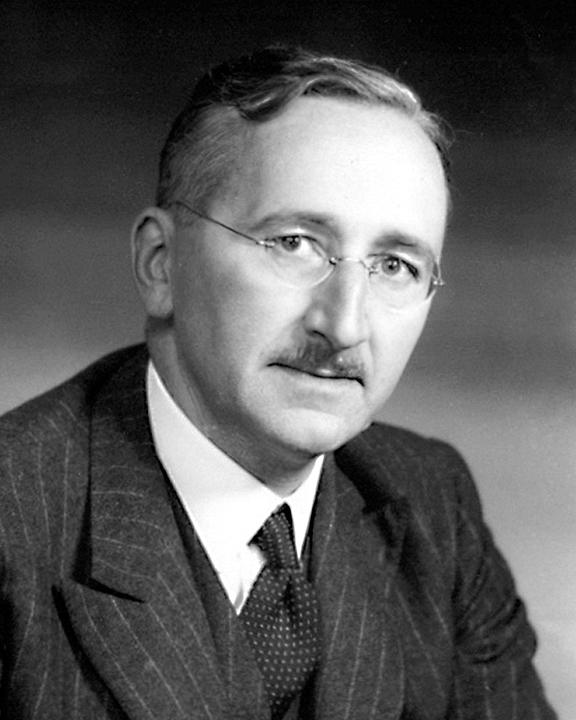
         FA Hayek

Wesleyan University professor Richard Adelstein introduced  me to FA Hayek almost twenty years ago, but I had never read his seminal work, The Road to Serfdom until this week. I knew Hayek was the classic conservative economist, who placed his faith in markets and who mistrusted big government planning more than anything. I knew that, through the University of Chicago, he spread his influence such that he was, in some ways, the founder of the American libertarian movement.


I had no idea, however, how lucidly and powerfully he wrote, nor how truly liberal he was. In fact, Hayek used the word "liberal" in the old, 19th-century way -- to mean those opposed to dictatorship and those who believed in the right and the power of the individual to decide his own fate.

For Hayek, the conflict was  not between government on one hand and liberty on the other, but between governments that helped facilitate liberty and governments that suppressed it. Mostly, he feared central planning, the effort to make government decide the values -- economic and otherwise -- of all people with goal being perfect efficiency and perfect equality. Planners, he feared, were the first step on the way to totalitarianism because they believed that some rational eye in the sky could decide for everyone what was good and right.

But Hayek was not anti-government. Unlike today's Tea Party types, who eschew all government, Hayek believed it was essential for wealthy societies to provide some minimal quality of life for everyone by funding programs including -- wait for it -- government-sponsored health care. He figured that programs like these only allowed more opportunity for serious individual decision-making. In fact, his second-greatest fear was a drastic difference between rich and poor because it might provoke the kind of thinking that led to Hitler in German and Stalin in the USSR.

I wish the whack-jobs in our political arena could read and understand Hayek, so we could get to the real business at hand and stop wasting our time debating nonsense.

Wednesday, September 12, 2012

What We Ought to be Debating


This cartoon, published at The National Review On-line, represents the crux of our political dispute over the economy.

In the view of conservatives, including (maybe) Mitt Romney, the federal government slows economic growth by restricting the liberty of individuals to adapt and innovate. It also creates dis-incentives for profit, because the government taxes people when they acquire more wealth.

In the Democratic Party view, articulated by President Obama's "you didn't build that" line, government facilitates growth rather than inhibiting it. Building infrastructure, refereeing financial markets and priming the pump all must be done at the federal level, they say, because no other institution has the resources for such big jobs.

The problem is that we are not engaging in debate. Because Romney will provide us with no specific idea of how much government he would tolerate or even endorse, we can't test his assertion that Obama has strangled us.

One reason the Tea Party protester is confused about the government's "hands on Medicare" is because she has not heard any serious exchanges about what that phrase might possible mean. A "debate" in which one side refuses to engage is like the sound of one hand clapping.

Sunday, September 2, 2012

Do They Even See the Irony?

Also, maybe a little more cash for schools?


Courtesy of "The Dave Factor" :  http://davefactor.blogspot.com/2011/08/signs-signs-everywhere-teabagger-sign.html

Jindal Makes the Case for Obama

Not long ago, Louisiana governor Bobby Jindal was the darling of the Republican Party. Even more recently he won the favor of Tea Party types by refusing to participate in the new federal health care exchanges.  He likes to call himself a true conservative, the kind of guy who will keep the government off our collective back.

But when stuff hits the fan on the Gulf Coast, he's more than happy to take some help. In fact, he thinks we all should be backing him up down on the bayou. After Hurricane Isaac hit earlier this week, Jindal said Protecting the Louisiana coast is good for Louisiana — it’s also good for this country .... It’s a good investment for the country to be making... It’s investing in the goose that’s laying the golden eggs.” 


That "investment" took the form of millions of dollars in infrastructure planned, built and paid for the Army Corps of Engineers, the ultimate in federal agencies. The result, Jinda argues, is the growth of important industries, like fishing, in that part of the world. In other words, shrimpers make the money, but they need federal government help to do so. In other words, the federal government has an important role to play in economic growth. Sort of like what President Obama said earlier this summer, when Romney and his ilk mocked the idea.

Guess rugged individual only applies to the other guy.